Sunday, April 3, 2011

Fairy Tales and Future Fiction


In Guillermo del Toro’s Pan’s Labyrinth, a young girl named Ofelia moves to the country to live with her cruel stepfather in the midst of the Spanish Civil War. In the woods around her new home, she discovers an ancient labyrinth inhabited by strange creatures, and she learns that she is the reincarnated Princess of the Underworld. She must complete three tasks in order to take the throne, and all the while she must survive her sadistic stepfather.

Alfonso Cuarón’s Children of Men is set in a futuristic London society where the human race has become infertile and humanity is on the brink of extinction. A man named Theo becomes caught up in a race to save a miraculously pregnant young girl named Kee, fighting harsh immigration laws, terrorist groups, and government organizations.

I find it fascinating that Cuarón and del Toro are such close friends, because these two films, though containing entirely different subject matter, are incredibly similar. Both films are about dystopian societies, though Pan’s Labyrinth is set in the past and Children of Men is set in the future. Both of the directors have Catholic backgrounds, according to Lynn Hirschberg’s article “Directors Without Borders,” and this is visible in both of the films. Children of Men is full of religious symbolism, the most prominent being Kee representing the Mary-figure and her child representing the Christ-figure. Del Toro says in Hirschberg’s article, “I try to take all that’s beautiful about religion—free will, virtue, nobility—and apply it to life. Ultimately, my films are about characters trying to access some kind of spiritual realm on earth.” Ofelia creates the idea of the underworld to escape from the horrors and tragedies of her reality, and she relies on the idea of her father (her “real” father, the King of the Underworld) saving her. And (*SPOILER ALERT!!!*) when she dies at the end of the film, she is transported into her ideal world, becoming the princess she believes she is meant to be and reuniting with her mother and father; this world is her own personal Heaven.

The religious aspect of Pan’s Labyrinth is disputed in Katje Richstatter’s “Two Dystopian Movies…and their Visions of Hope.” The article discusses the characterizations of humans into good, evil, and innocents, but goes on to say that religion is on the side of evil in this film. This statement is in reference to the fact that there are several priests present at the Captain’s dinner party. The article then says that Ofelia’s redemption lies in the world of magic and pagan gods. My opinion is that the themes in Pan’s Labyrinth are pro-religion, not anti-religion. Even though there is magic and fantastical creatures involved, it is similar to The Chronicles of Narnia series by C.S. Lewis; there is magic and fantastical creatures in that series, but the overall theme of the series is Christian-based, with the God-figure represented by Aslan the Lion. The God-figure in Pan’s Labyrinth (again, my opinion) is the King of the Underworld, the man who Ofelia believes is her real father (if she is indeed the reincarnated princess). I see the King as the God-figure because he is powerful and seemingly unreachable, yet he loves his daughter unconditionally and welcomes her home with open arms at the end of the film, despite the fact that she strayed so far from him.

The endings of both films are similar in the way of ambiguity; after watching both films, I was and still am unable to decide if the endings were happy or sad. I think that was the intention by the directors, so that the audience could interpret whichever way they wanted. It could also be that they were trying to preserve the realism; Cuarón especially tried to make Children of Men as realistic as possible, choosing a more documentary feel, using very little lighting and manipulating it so that it appeared to come from natural sources on screen, and shooting long takes in mostly wide shot to keep the audience captivated. There is no real explanation about the endings of the films, which would normally be unsatisfying; an audience typically wants a closed, definite ending. However, Children of Men and Pan’s Labyrinth are both such intriguing, intense films that the endings of both seem very appropriate. Richstatter’s article also mentioned that both films “are dark but not despondent.” I agree with this statement; even though the films are very intense, dramatic, tragic, suspenseful, etc. there is always an element of hope present. In Children of Men, the hope lies with Kee and her baby, and with Theo getting the two of them to safety. In Pan’s Labyrinth it is the idea that Ofelia will complete her tasks and become princess, escaping her hellish life. The point is, no matter how bleak things may look, there is never an instance of “all is lost,” even at the end of the films when (*SPOILER ALERT!!!!*) Ofelia is killed and Theo is (possibly?) killed. We know that Ofelia has made it to her palace, and that Kee has made it to her sanctuary.

Overall, I greatly enjoyed both films. I have seen Children of Men multiple times, and it is one of my favorite films. This was my first viewing of Pan’s Labyrinth, and once I watched it and then read the articles, I was not in the least bit surprised that the two directors are such close friends. The films have so much in common, despite telling completely different stories.

Memorable Moments:
These are just a couple of things I wanted to make mention of but couldn’t fit in anywhere else.

• Anthony Lane in his article “Under the Volcano” refers to Captain Vidal as “an immaculate sadist.” I love this description; it suits the character perfectly. I thought this myself as I was watching the film, though in many more words than the ones Lane used to sum up the character. Captain Vidal spent however long brutally torturing the captured rebel and washed the blood from his hands off in the rain, and not a hair was out of place. Brilliant description.

• In the New York Times article, Alejandro González Iñárritu is quoted as saying, “Good directors don’t answer questions with their work. They generate debate and create discussion.” I completely agree with this statement. I love watching a film, then leaving the theater or room or wherever and immediately launching into a discussion of the film. I love when the people I’m with get a different read on the film than I did, and therefore have different opinions of it. Sometimes I think a film can and should be made in response to a question that the filmmaker is curious about, but since there are usually so many answers to every question, I think the result is much better if the film asks questions instead of answers them.

• I also want to point out the color schemes of both films. The colors in each are very muted, using greys, greens, blues, etc. The only bright colors are explosions and blood. This is true in both films. I love these color schemes because they make the blood more vibrant, more shocking. It’s always sort of a shock to my system when I see the bright red of the blood against such a muted backdrop, and it makes that moment in the film all that more intense and meaningful.
New Terminology:

Dystopian: [dystopia] an imagined place or state in which everything is unpleasant or bad (opposite of utopia)

Flagellants: people who subject themselves or others to flogging, either as a religious discipline or for sexual gratification

Aegis: the protection, backing, or support of a particular person or organization

Eldritch: weird and sinister or ghostly

Despondent: in low spirits from loss of hope or courage

Scumbled: [scumble] modify by applying a very thin coat of opaque paint to give a softer or duller effect (I can see how this word fits in context to these films, though obviously not with paint)

Obsequies: funeral rites

Myopic: nearsightedness; lack of imagination, foresight, or intellectual insight

Macabre: disturbing and horrifying because of involvement with or depiction of death or injury

Insularity: ignorant of or uninterested in cultures, ideas, or people outside one’s own experiences

Apparatchik: (derogatory/humorous) an official in a large organization, typically a political one

Eschatological: the part of theology concerned with death, judgment, and the final destiny of the soul of humankind

The ignition of cultural change in the film Moolaade

Trailer


The ritual of female genital mutilation is a rite of passage for young women, marking their movement from childhood to womanhood. Unfortunately, its effects are extremely problematic, from decreased sexual pleasure to extreme pain during sexual intercourse, infertility and making it hard for vaginal births to take place; up to and including actual death from factors including blood loss or infections caused from improperly sanitized knives. The practice grows out of the usual patriarchal ideas about guarding women's sexual purity. If one makes sex painful, then women are less likely to go out and seek it outside of community prescribed norms, which are usually marriage. Several years before Moolaade begins, Colle Ardo Gallo Sy, the second wife of a respected village memebr, Cire, lost two children and had to have a Cesarean section in order to birth her daughter Amasatou. She decides then that she will not allow Amasatou to be mutilated in order to spare her the problems that she has gone through. Her husband is fond of her, and so backs her decision. Although the ritual is a prerequisite for adulthood and marriage, Amasatou still catches the eye of the heir to the village throne Ibrahima, and is engaged to be married to him. One might surmise that the villagers decided to let the situation be, considering the circumstances and the fact that Amasatou is the only person who has been opted out of the practice.

Amasatou, however, is a threat to the social order, because she is a symbol of a possible different way. And so it is that a few days before Amasatou's fiancee is due home from working in France, six little girls escape their appointment with the knives of the Salindana, four of whom ask Colle for sanctuary. Colle decides to give it, and invokes Moolaade (magical protection). By placing the symbolic rope across the compound, the Salindana, (the ceremonial group of women in charge of the rite) are unable to get the girls, and so they are safe...as long as they do not cross the rope. Moolaade lasts for the duration of the circumcision rite, and so if the girls manage to stay inside, they will be safe from the rite for the next seven years, when it comes around again. The other two girls drown themselves in a village well in order to avoid the rite. Colle is now in complete rebellion against community mores and values, and thus there are consequences. The Salindana petition the community elders, who authorize increasingly harsh measures to break her rebellion. Amasatou's engagement to Ibrahima is broken, the radios of all the village women are taken away and piled up for burning in the village square because the elders think that Colle's rebellion was inspired by the radio programmes. Colle refuses to break, aided by her powerful older sister-wife. Therefore, Amath, Colle's brother-in-law, exercises his power as elder brother over Colle's husband Cire and goads him into whipping her, and Colle defies this too, and get most of the village women on her side. The whipping is then interrupted by itinerant trader Mercenaire, and he is murdered by a mob of village men for his pains.

As Colle recovers from her wounds, she is made aware of one more tragedy. One of the mothers managed of the children seeking sanctuary lured her daughter out and took her to fulfill the rite. The child died. Colle, backed by the grieving mother and the rest of the annoyed village women, defy the village elders and the Salinada and declares the practice of female genital mutilation ended in their society. Her remorseful husband and Ibrahima join the rebellion by telling the village council to shove it and deciding to marry Amasatou, respectively, and the film ends triumphantly with the celebration of the women. The circumcision knives are burnt in the same fires that are consuming the village women's radios.


The supplemental texts for the most part focus on the extraordinary activist filmmaker behind the story, Sengalese director Ousame Sembene. Unfortunately, most of the articles were published on the occasion of his death in 2008. Nevertheless, a portrait of the man emerges from the remembrances, which might help to contextualize the film. Mr. Semebene was born poor, and proceeded to embark on a lifelong journey of self-education. Contact with the working world through a series of manual jobs informed his politics and he proceeded to become an advocate of social justice for the marginalized. He turned to writing as a form of activism, and his output included novels and short stories. He decided to try film in the 1960s as a way of reaching more of the masses, since illiteracy necessarily limited the number of people his words could reach, and thus he went to Russia for a year to learn how to make them. Then he decided to make said films using Africa's indigenous languages of instead of the colonial European languages that were imposed upon them. Mr. Semebene critiqued the problems that both colonialism and traditional beliefs caused and thus he annoyed both Europeans and African governments in equal measure. Mr. Semebene was a firm disciple of afflicting the comfortable and comforting the afflicted, and he continued to advocate for the marginalized until he died. His significance to the people who miss him however, is not only rooted in his work. Who he was while doing this work, that is, the fact that he was a politically aware Senegalese man, advocating from a position of intimate knowledge of both colonialism and tradition made his artistic choices authentic and thus a needed bulwark against a long, ignoble and continuing tradition of problematic Western storytelling and activism about Africa.

How Not to Write About Africa - Binyavanga Wainaina - narrated by Djimon Hounsou


Two articles mention the film itself. The new Yorker's article is a brief review, that somehow seems to come to the conclusion that romantic love was the kicker to the rebellion. It does however defend the film as "politically sophisticated" and takes note of the fact that the film portrays the reasoning behind local customs, instead of branding them as archaic and barbaric as so many Westerners and Westernized minds tend to do. The much more in-depth analysis by the absolutely wonderful magazine Meridians: feminism, race, transnationalism, compares Moolaade to his earlier film Faat Kine, and explains in detail how each film's disrupts of the standard Western portrayal of African Muslim women as victims in need of rescue from a barbaric culture that continues to stultify international discourse. Indeed, the films bring very clearly to the fore that African Muslim women can bring to life indigenous feminisms, womanisms and women's rights activism using material that is culturally-based in order to improve life on their own terms.

As I read through the material there were a couple of questions that I had:

1. What kind of distribution did this film in Senegal and was the film shown in other countries in Africa? Was it ever shown in the village in which it was made, Djerisso in Burkina Faso? And what did they think of it?

2. I noticed that the film brought in a total of $434,553 worldwide, half of which was in the USA. The widest release was 4 theatres, and I am going to guess that those theatres were in New York. Too often, films like this play in elite art movie theatres to those in the know and then disappear, while many of those who would respond to the message are left out in the cold. Many Jamaicans watch Nollywood films, for example, and I am sure that there would be interest in more film from various African nations. What would it take to market the films to more diverse audience who do not know that stuff like this is available?

3. Where are the actors now?

4. What more can we do to support the production of stories about African told by Africans so as to complicate the largely ignorant and stereotypical view that prevails in Western discourse in Africa.

5. How can we support the growth of film industries that is needed for the above goal to be achieved?


Interesting points for discussion include:

1. Comparing and contrasting Hollywood story telling as represented by Hotel Rwanda with Moolaade.

2. The clash between a mainstream view on the part of Westerners that Islam is not able to birth women's rights; and the fact Colle was able to dispute the village elders' claims that female genital mutilation was Muslim tradition by pointing to a iman's sermon she had heard on the radio denouncing the practice as unIslamic.

3. The use of cinema as a tool of activism, especially as a way to reach people who are illiterate.

4. The well-rounded portrayal of women characters in the film.

5. The different ways in which dissidence to the prevailing social order can be expressed depending on one's culture.

6. The clash between Western women's rights activists and African women's rights activists.

7. The complicated politics surrounding the campaign against female genital mutilation. For instance the fact that traditional ideas are sometimes used as a backlash against colonialization and continuing oppression of various forms, thereby making it harder to eradicate the practice.


Since the texts did a great job in analyzing the gender issues in the movie, I wanted to make a quick note about the them of cultural change via internal and external means that under-girded the narrative. Culture is not static. It changes, sometimes slowly, sometimes quickly but it changes. Sometimes the change is wholesale and that is usually a result of overwhelming outside forces like globalization and climate change. Sometimes the change is less severe and the culture drops some parts and incorporates new parts into itself. One of the things I noted in Moolaade was the village was undergoing cultural change from many directions. Firstly, the villagers were becoming used to the continued introduction of industrial goods like plastic pans and radios and shoes and white bread brought in from France via the itinerant vendor Mercenaire. It was interesting to see the credit system being applied to the cope with the sudden want of all this new stuff, and to see the chief's son Ibrahima working in France in order to bring home money and even more modern things to the village. Village culture was being changed as all of a sudden people like Amastsou suddenly needed a whole lot of new things for her wedding from Mercenaire, whereas without him, she would have been fine with whatever it was that people used to celebrate weddings in times past.

In addition to this, new ideas and confirmation for ideas that people like Colle were thinking were starting to percolate among the people. And even if they were not paying much attention to the ideas, the habit of listening to the radio had taken hold. I am very sure that with the introduction of television via Ibrahima, village habits and ideas were on the brink of changing even more. So I understand the elders surprise and dismay when they found themselves facing the fight against the circumcision rites.

Yet, this is not the first time that serious cultural change had taken over the village. After all, Islam is not native to the continent of Africa. And the concept of Moolaade is definitely not Islamic. And the elders met several times right in front of the mosque and the symbol of Moolaade, and one of them even told the story of the ritual and why it was that with the coming of the Islam, the villagers chose not to throw away all of their older faiths. The parallels are obvious. Imagine the feelings of the village government at the time when Islam came, and how they probably looked askance at this new threat to established power structures.

Cultures will change, but I like that fact that in this story of an African village, the inhabitants are the ones driving the change, as opposed to the recent history of globalization and colonization and other things leading the whole scale decimation of cultures. Hopefully as they go into the future, they will be able to synthesize the changes to produce something that continues to serve them well. It is unfortunate that Mercenaire's and that child's lives, as well as Colle's whipping and sexual punishment were the prices to be paid.


Dialectician - A philosopher who thins about the world in opposites.

Semiotics - The study of signs and symbols

Reductive - to diminish or make smaller

Homework!

We will focus on Judith Helfand and her recent work... Specifically, we will watch BLUE VINYL and BARBER OF BIRMINGHAM. Please be sure to research Judith, her work, and the issues involved. At minimum, you are required to visit the sites below and mine them for information and ideas.
Thank you, Polina

Barber of Birmingham: http://barberofbirmingham.com/

Blue Vinyl official site: http://www.bluevinyl.org/

My House is Your House: http://www.myhouseisyourhouse.org/

Working Films: http://workingfilms.org

Blue Vinyl @ Working Films: http://workingfilms.org/display.php?modin=50&uid=10

PVC: The Poison Plastic: http://www.pvcfree.org/

Judith Helfand's site: http://www.judithhelfand.com/

Chicken and Egg: http://www.chickeneggpics.org/

Saturday, April 2, 2011

Men Cannot Have Children


Film: Children of Men

Word: Altruism: Merriam-Webster Definition: unselfish regard of or devotion to the welfare of others.

Summary: Children of Men is a film based on the 1992 novel by P.D. James. The film is set in 2027 future England after the collapse of the world and the annihilation of the human race is becoming more and more present. The film starts off with us following Theo (Clive Owen) on a coffee shop disinterested in the sudden news of the death of the youngest person alive, being 18 years old. We start with violence, gritty violence, from an anonymous and random bombing at the coffee shop, to the train where people are throwing objects at the windows, we see the cages “fugies” or refugees are being kept in awaiting their melancholy fate. Theo is a character who seems to be disaffected by the current police state of Britain, who we later find out was once a political activists and still participates in the alternative by visiting a pot smoking Michael Cane, where we learn more about the current state. Theo is later picked up by the “fishies” led by his ex-wife to help find them papers for a girl he is to then travel with, he has no idea what this mission is for but to help his ex-wife and possible find some hope or meaning in his mundane sad life. Theo finds out this girl he is to travel with, Kee, is pregnant, something that has not been possible from the female race for the past 20 years. Theo then decides to help Kee get the “Human Project” a mythical group of people that are to help preserve the human race. This film is gritty, violent, and beautiful. It leaves the viewer on the edge of their seat up to the end. It is shot in a majority of continuous shots – one of the most powerful is during the “uprising” and escape of Theo and Kee to the coast. This film is filled with political and biblical comparisons and illusions, one of the most memorable is that of Kee being the Mother Mary carrying a “Baby Jesus” in a manager- a scene when Theo finds out Kee is pregnant.

The Director Alfanso Cuaron used only natural lighting or made the lighting look as if it were coming from a singular or natural source. This adds a effect to the film that would not have been achieved with the use of traditional lighting techniques. Cuaron also used a film that would allow for the image to not be so heavily affected by the lighting choices he had. In the article “Humanity’s Last Hope” Emamanuel Lubezki talks about his techniques that were used in Children of Men. One of Lubezki’s comments about the long shots was very interesting to me he states, “We did the movie in long shots to try to get the audience to feel they are there.” I felt that he achieved this well. Being one of the things I noticed when watched the film, I felt as if the camera movements and position added itself to making the view feel as if they were a part of it. One of the most influential and greatest scenes was in the last 30 minuets or so when it is a continuous shot through the camp when Kee and Clive Owen’s character, Theo, are attempting their escape. you can tell in one part that there was a small cut, which the blood was wiped off the lens but it still continued in a way that made it seem as if it were a continuous shot. To me this was really powerful and a made a large impact on my reception and love for the movie.

Onto the more political side of the film, Children of Men looks at what the world has become in 2027, with waste, fear, and how women are responsible for the continuation of the human race. This movie focused heavily on the women’s role in society as far as being responsible for human existence. There is nothing to say that women are the cause for infertility and there are billboards all around the state “Avoiding fertility tests is a crime”, but the importance put on Kee, the carrier of the new world baby is so great that it seems as if women are the “key” to finding how infertility happened and how to change it.

Another topic that is faced and very violently is the treatment of immigrants in the now police state of Britain. In this film the world has fallen and “Britain still soldiers on”, with that the patrol is up and refuges that have migrated from their countries to find sanctuary are corralled and almost handled in a Nazi holocaust way, being kept in large crates awaiting transportation to the nearest “camp” that seem to be destroyed cities that are now the cities in which these immigrants are to stay. In the Article “What If…?” Blake states “ Vigilantes patrol our borders in the southwest and the Justice Department launches coordinated raids on meat-packing plants to round up hundreds of undocumented aliens living productively in our country for years.” And continues with a look at the current situation of how borders are controlled how nations have huge gaps between rich and poor and how Children of Men doesn’t seem that far fetched. That was something that I was curious about in watching, is why does Britian the current world super power at this point not open its gates to help the immigrants that clearly have no where else to go. If the world is going to end in a matter of a few decades then what is the point of keep other countries and people out?

Friday, March 25, 2011

Invisible Children: A Case Study


In 2003, three young film school graduates—Jason Russell, Bobby Bailey, and Laren Poole—decided to take a trip to Sudan to make a documentary. None of them had ever made a documentary before, and only one of them had ever been to Africa. They earned money by sending off letters to friends and family asking for donations, bought their equipment off of eBay, and got on a plane to Africa. They met up with Jolly Okot, who became their guide during their adventure. She offered to drive the boys to Sudan. However, on the way to Sudan, a truck in front of them was shot and the road became too dangerous to travel (Invisible Children: Rough Cut, 2003). Jason, Bobby, and Laren were stuck in Gulu, Uganda for the night (Sarette). Gulu is located in northern Uganda just south of Sudan, an area now considered one of the most dangerous places in the world (Thomson). While in Gulu, they quickly became aware of dozens of children flocking to the city. They asked Jolly what was happening, and she explained that every night the children would travel several miles on foot to the city to sleep in hospitals, bus stations, verandas, and anywhere else they could find space to curl up. She then told them a horrifying story: Every night, a rebel group called the Lord’s Resistance Army (LRA), led by a man named Joseph Kony, traveled through the villages, kidnapping children, killing their families, and forcing the children to become soldiers in his war against the Ugandan government. The children ran away to hide from Kony and his army (Deneen).

The rebel movement began in the 1980s with a woman named Alice Lakwena, who believed that the Holy Spirit spoke to her and told her to overthrow the government of Uganda. She gained a strong following, known as the Holy Spirit Movement, and lead a powerful resistance against the government. When she was exiled a few years later, Joseph Kony took over, claiming to be Lakwena’s cousin and saying that the Holy Spirit spoke to him as well. However, Kony’s following was not as large. The people of Uganda began to grow tired of the rebellion, and lost interest. In order to replenish his diminishing numbers, Kony and his rebels resorted to abducting children and training them to be soldiers (Eichstaedt xix). It is believed that over ninety percent of Kony’s troops were abducted as children (Batstone 111).

The Ugandan government has not done much to help the situation, though they have made attempts. In 1996 they began relocating citizens to displacement camps, where they hoped to be able to protect them from the LRA (Batstone 145). However, the camps were disgusting places full of disease, cramped space, and food shortages, and though the government promised to return these people—called internally displaced persons, or IDPs—to their homes, approximately one million people still live in these camps today (Eichstaedt 29). Now, in 2011, the war between the LRA rebels and the government of Uganda is the longest-running war in Africa, and has also been called “the most neglected humanitarian emergency” in the world today (invisiblechildren.com).

Jason, Bobby, and Laren knew that now that they had this information, there was no way they could ignore it. The result of their visit to Uganda was Invisible Children: Rough Cut, a fifty-five-minute documentary exposing the horror that until then seemed as though it could only exist in fiction. The film is fast-paced, described as having an “MTV-feel” as opposed to a “PBS-feel” (Sarette). In order to get their film out there, they used what is known as “guerilla marketing;” they recruited fifty college students to travel the country with them in a van to screen Rough Cut at roughly one thousand venues such as high schools, universities, and churches (Steers). These screenings marked the beginning of the Invisible Children movement. Once they saw their audiences’ reactions and realized the impact of their film, they founded Invisible Children, Inc., a non-profit organization dedicated to exposing the plight of the child soldiers and seeing an end to the LRA’s reign (Khabie).

Invisible Children, Inc.’s outreach is unique; they use film as a primary tool for their outreach, producing both DVD releases and online videos. The organization partnered with Digitaria, a digital marketing and technology firm, to develop a brand and a website (Khabie). Since Rough Cut, Invisible Children, Inc. has released several other films and dozens of online videos. These films and videos are their main method for communicating with their supporters and distributing updates and calls to action. In addition to their online marketing, which also includes an email system and a frequently updated blog, the organization continues to travel around the country screening different films. Invisible Children’s outreach program is deliberately targeted to the population they want to impact: students. As mentioned before, their films and videos have a distinct “MTV feel” to them, and the majority of their screenings are held at high schools or universities (Sarette). Their films were also shown on the socially conscious television network Halogen in April 2010 (Chowning).

Invisible Children, Inc.’s calls to action are never general; they are always very specific, dedicating each video to one specific child. They design their campaigns around helping individuals, people with names, faces, and stories (Sarette). The Roadies—the volunteers who spend months traveling the country screening the films—actually bring some of the former child soldiers with them on the tours and let that individual tell his or her story firsthand (Sarette). The organization designs campaigns that get their supporters physically involved. For example, during the “Global Night Commute” in 2007, thousands of people walked several miles to a central location and slept there; the purpose was to raise awareness for the children in Uganda who would commute every night to avoid abduction by the LRA. During the “Displace Me” campaign, also in 2007, even more people left the comfort of their homes and spent the night in the streets to experience what it was like to be displaced (invisiblechildren.com). These tactics make the plight of the children of northern Uganda more tangible, even if it is just symbolic, and are therefore more likely to draw people into the cause.

In 2009, Invisible Children began a movement called “We Want Obama.” The organization created a Citizens Arrest Warrant for Joseph Kony, which was subsequently signed by 259,472 people. This warrant called on President Obama to take action against the LRA. Invisible Children came up with the LRA Disarmament and Northern Uganda Recovery Act of 2009. The purpose of this law is:

“Stopping the LRA, by mandating President Obama to devise an interagency strategy to prevent LRA violence, which should include a multilateral plan to apprehend top LRA leaders, encourage defections of rebel commanders, demobilize child soldiers, and protect civilians from rebel attacks; and investing in sustainable peace, by targeting US assistance to recovery and reconciliation efforts in northern Uganda, which are essential to rebuilding and healing war-affected communities and preventing future conflicts” (“LRA”).

There were three separate campaigns involved in the movement. The first was called “How it Ends.” On June 22 and 23, 2009, nearly two thousand people traveled to Washington, D.C. to meet with their elected officials. They joined over four hundred lobbying meetings to request that Congress pass the bill. As a result of this campaign, sixty-six Representatives and seventeen Senators co-sponsored the bill. The next phase was called “Hometown Shakedown.” On November 18, 2009, thousands of activists made phone calls to their Senators and Representatives, again attempting to persuade them to pass the bill. As a result, seven Senators and six Representatives co-sponsored, including Majority Leader Harry Reid and Foreign Relations Committee Chair John Kerry. The support of these two men led to the Senate’s first vote on the bill in December 2009. The fight for the bill went on for the next six months (“LRA”).

The third step of the movement was called “Dr. Coburn: Please Say Yes.” On December 19, 2009, Senator Coburn blocked the bill from passing in the Senate; his reasoning was that he had concerns about the source of funding for recovery and rehabilitation of Uganda. Over fifty activists pledged to stand outside Coburn’s office for twenty-four hours a day until the block was lifted. Eleven days later, Coburn finally pledged his support. The next day, the bill passed unanimously in the Senate. By the end of the “We Want Obama” movement, the bill had a record-breaking amount of support from Congress: two hundred sixty-seven members of Congress cosponsored the bill. Due to the incredible amount of public support, President Obama held a public signing ceremony for the bill and released the first statement by any administration outlining the United States government’s commitment to ending the threat of the LRA (“LRA”).

Invisible Children, Inc. publicized the “We Want Obama” campaign through their blog and through online videos imploring supporters to help. The success of this campaign is a great example of how the organization operates through films and videos. The videos are shorter, more commercialized, and focus on whatever specific campaign is happening at the moment, or advertising for upcoming tours and events. The films are about bigger issues; Rough Cut is about exposing the plight of the children and raising awareness about the atrocities of the LRA. One form of media is not more or less effective than the other; both have specific purposes and both carry out their purposes quite successfully. The organization does not have huge distribution deals for their films; they have to rely almost exclusively on their own resources, and their success in promoting themselves has earned Bobby, Laren, and Jason appearances on popular television talk shows like Oprah and Larry King Live, in magazines like Rolling Stone and GQ, and endorsements by celebrities such as Pete Wentz and Kristen Bell (invisiblechildren.com). Invisible Children, Inc.’s goal is not to make as much money as they can, or become famous. Their purpose is to expose the situation in northern Uganda to as many people as possible and provoke a reaction from their audiences.

The original reaction to the first ten minutes of the film is typically humor; it seems as though it will tell the story of three young men who go on a crazy adventure in Africa, discover themselves, and return home with a fun story to tell. But as the film goes on, it has an intensely sobering effect; one particularly heartbreaking scene involves a young man named Jacob, who had escaped from the life of a child soldier and was being hunted by the LRA. He mentions early on in the film that the children do not cry; if they cry, and the rebels see them, the rebels will kill them for being weak. But towards the end of the film, when talking about his older brother who was killed by the LRA and what he would say to his brother if he saw him again, Jacob dissolves into heart-wrenching sobs, and the camera stays on him for almost two minutes as he cries. The filmmakers use images such as this, coupled with sad yet inspiring music, to create a dramatic effect. The audience can never fully understand the plight of these children and the lives they have led. The way the film is presented draws the audience in and makes them connect with the characters; Jacob becomes a protagonist of sorts, and when he breaks down into tears only a heartless person would not want to take him in his or her arms and comfort him.

In addition to the hundreds of thousands of people who participate in the campaigns and movements instigated by Invisible Children, many more thousands of people have helped in monetarily. One program started by the organization is called Schools for Schools (S4S). The goal of S4S is to raise the standards of secondary education in northern Uganda and to encourage and support rehabilitation and recovery purposes. Schools around the country are involved in a competition to raise the most money, which is used to build and reform schools in Uganda (invisiblechildren.com). According to the Invisible Children website, S4S raised over one million dollars this year. Donations also support the Legacy Scholarship Program, which provides scholarships and mentoring to high school and university students from northern Uganda. Thanks to the donations, Invisible Children, Inc. is currently able to provide scholarships to 563 secondary school students and 201 university students. Audience members have also joined the TRI Foundation, which requires them to donate three dollars a week, or twelve dollars a month, to Invisible Children. All of the money goes towards rehabilitation and recovery programs (invisiblechildren.com).

Overall, the audience reaction has been to take action. One young student said after a screening, “At first, the movie is so funny it gets your attention, but by the end, you just feel responsible and obligated to do something to help” (Vaughn). This reaction is typical of most audiences, and it is exactly the reaction that Invisible Children is hoping to create. However, there is a lot of criticism about Invisible Children, Inc. Many people say that the boys took a stupid risk by thinking they could just walk into the most dangerous place in the world unprepared and unprotected—they did not even do a lot of research about Sudan before they left. They simply relied on Jason Russel’s experience from his trip to Kenya, and it did not seem to occur to them, from what Rough Cut shows, anyway, that Kenya and Sudan are two very different worlds. Many critics—specifically people who have worked “on the ground” in Uganda for months or years—say that three white boys from California could never possibly hope to understand a day in the life of a northern Ugandan citizen. These critics claim that the organization was started by rich, private-school kids who just want to feel like they are making a difference in the word, and they refer to the organization as being full of hypocrites who preach about the issues all day before returning home to their soft beds and other luxuries (Steers). These criticisms are completely understandable, though it is heartbreaking that some people can be so dismissive of such an important cause. But despite these critical views, the overwhelming response is anger, empathy, and the desire to take action.

The media has a tendency to focus its attention on economically relevant issues. In his book Not For Sale, David Batstone says, “Perhaps if the rebels were stealing oil rather than children, the world would pay more attention” (135). Thanks to Jason Russell, Bobby Bailey, and Laren Poole, the world has started to pay attention. Ultimately, it is not a question of whether the films are more effective or the actions are more effective. Rough Cut was able to expose the situation, which led to more films and videos, which led to actions, which led to the social change. It is all one long chain of events; none of the steps could have happened without the ones before it, and none of the other films or actions would have occurred at all if not for Rough Cut. However, even though all of these steps have been taken as a result of Invisible Children: Rough Cut, the war in Uganda is not over. Invisible Children is still holding campaigns to raise awareness and aid; on April 25, 2011, they will hold the “25 Campaign”, in which thousands of people will go silent for twenty-five hours so that the victims of the LRA can be heard. Money raised for this campaign will fund “The Invisible Children Protection Plan” and other rehabilitation projects. Invisible Children also has plans to tackle Joseph Kony in The Democratic Republic of Congo, Central African Republic, and Sudan, where he and his troops have spread and continue to cause terror. Since Rough Cut was made, so many more people are aware of Africa’s longest-running war. As of 2009, the LRA has been charged by the International Criminal Court with eighty-six counts of war crimes and crimes against humanity (Eichstaedt 8). Kony himself has thirty-three (9). In December 2001, President George W. Bush declared the LRA a terrorist organization (Batstone 135). There is no way to know if this issue would have been brought to light without the work of these three young men, but because of their film the issue was brought to the world’s attention much sooner. So the ultimate question is, “Can a film change the world?” The answer: Yes, yes it can, and the proof can be seen in Invisible Children: Rough Cut.


Works Cited

Batstone, David. Not For Sale: The Return of the Global Slave Trade and How We Can
Fight It. New York: HarperCollins Publishers, 2007. Print.

Chowning, Kyle. “Halogen TV to Air Television Premiere of Invisible Children
Documentaries.” Halogen. Web. 2 Apr. 2010. 8 Feb. 2011.

Deneen, Sally. “Making a Difference—Invisible Children: Helping Young Victims in War-
Torn Africa.” Success. Web. 2011. 8 Feb. 2011.

Eichstaedt, Peter. First Kill Your Family. Chicago: Lawrence Hill Books, 2009. Print.

Invisiblechildren.com

Khabie, Daniel. “Making Invisible Children Visible.” bizSanDiego. Web. 4 Jan. 2007. 8 Feb.
2011.

“LRA Disarmament and Northern Uganda Recovery Act of 2009.” Resolve. Web. 2011. 8 Feb.
2011.

Russell, Jason, Bobby Bailey, and Laren Poole. Invisible Children: Rough Cut. 2003. Film.

Sarette, Chris, and Susannah Vila. “How a Documentary Film Led to New Legislation.”
Alliance for Youth Movements. Web. 2011. 8 Feb. 2011.

Steers, Julia. “Giving a Voice to Africa’s Child Soldiers.” The Huffington Post. Web. 22 Feb. 2011. 25 Feb. 2011.

Thomson, Mike. “Who Can Stop the LRA?” BBC. Web. 16 Feb. 2011. 27 Feb. 2011.

Vaughn, Peggy. “Opening Eyes to Uganda’s ‘Invisible Children.’” Gazette. Web. 14 Feb. 2007.
28 Feb. 2011.

Wednesday, March 23, 2011

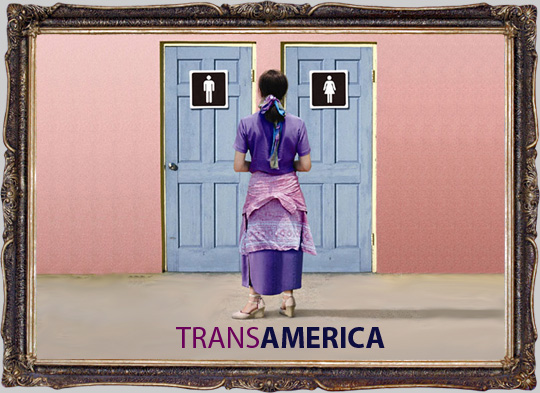
Trans-Cinema Night

Emily Collette, Kate E Lykins, Queer Straight Alliance, and

Stephens College Film series Present:

A TRANS-CINEMA DISCUSSION


WEDNESDAY, APRIL 6th at 7:00 p.m.

STEPHENS COLLEGE- CHARTERS AUDITORIUM

Come for a discussion with a panel featuring Elise Taggart-counselor for Trans-people, her guests, as well as a few friends from Stephen’s own QSA!

The Low Down on Trans-Cinema Night

Emily Collette and I (Kate E Lykins) am throwing an event for our 'Cinema and Social Change' class. The assignment is to "work on organizing a screening and implementing an outreach plan." I chose the topic of Trans-people because a good friend of mine began her transition into a woman almost three years ago and it has been a fascinating story. I am considering making a short doc about her for my senior film project. I know there are many people that don't know much about Trans-people so we are organizing this program to both inform and inspire people that would like to know more.

Here's the DETAILS:

WHEN: Wednesday, April 6th at 7:00 p.m.

WHERE: Charters Auditorium in Stephen's College
WHO: Emily Collette and Kate E Lykins. We are screening the film through Stephens College's Film Club. QSA (Queer Straight Alliance) is assisting in promoting the event by using their Facebook and contacting guests. We wil one or two of Stephen's security available during the panel in case situations need handling.

FILM: Emily and I are going to show TransAmerica because it is a well known movie and we'd be able to discuss the narrative film idea of Trans-people vs. real life.

PR: In order to publicize the event we will use resources such as Facebook, Twitter, and E-mail. We will also give out flyers.

MEDIA: There will no media present at the event.

Here's the PLAN:

1) Emily and I will arrive at Charters Auditorium around 6:45 p.m. to set up and greet those who show up.
2) At about 7:00 p.m. we will start "Trans-America"
3)When the film is finished we will set up the panel in front of the room. The panel will consist of Kate, Emily, and guests
4) Kate and Emily will introduce why they created the event. Then the panel will introduce themselves to the audience with their names and a little about themselves.
5) The Panel will be a Q&A between the audience and the members. Emily and I will provide questions to help get the discussion going.

QUESTIONS
*This panel is a Q&A for the audience members that would like to know more. We are planning on asking as little as possible to allow guests to ask questions and for the panel to express what they feel is important. Even so, here are a few questions that may come up.

1) Do you feel that "Trans-America" provides an appropriate representation of Trans-people?
2) How do you feel media effects the Trans-society?
3) Do you feel like Trans-people are correctly represented in film/Hollywood.
4) What are some of the greatest problems that Trans-people face? What can people do to reach out and help?
5) Are there any other films that you feel represent Trans-people in a realistic light?

PLEASE COME!!!